Friday, August 18, 2006

Forgotten Conflicts and Media Focus


website page counter
There is the old saying that good news is no news. The events that attract more ‎attention are those that are about deep troubles or crises. Good news can be a one-day ‎event without follow-up. So do areas of little international importance where the war are waging have become forgotten like DR Congo. ‎

There are some parts of the world that are almost daily in the news because of their ‎impact on international affairs as they draw public interest as well as the involvement ‎of international leaders . Iraq has been prominently in the news since 1991. There ‎isn’t a single day in which we don’t have a report of violent deaths and destruction. ‎

But in general people get more interested in local and regional news. International ‎news can become of second importance if they are about a distant country. Daily news ‎in general has to do with age group and personal interests. Economic news attracts ‎less attention than political news except when there is a major stock market crash.‎

The Middle East has been at the focus of international news because it is a volatile ‎region. The most notable countries are Israel, Iraq and Iran‎
But for other countries as in Africa, they are rarely in the headlines on daily basis ‎despite the cases of refugees, diseases, famine and civil wars. Perhaps their cases ‎don’t look newsworthy as they don’t have a great international impact.‎

Whatever focus news media give to a topic, the public decide what to follow or ‎simply change for entertainment news without caring deeply about what is going on in ‎troubled areas around the world.‎

Wednesday, August 16, 2006

Pardoning Executed Soldiers


website page counter
There are many soldiers with perfect military training. However, like ordinary people, they ‎prefer to live in peace. Others feel boredom because of remaining confined to their ‎military barracks with no battle to wage, where they can show their heroism. Prior to ‎British military involvement in troubled countries, especially Iraq and Afghanistan, ‎many British pilots felt bored because there was no fight to make.‎

But there are other soldiers who object to go into war on moral grounds. These are ‎conscientious objectors. There were cases in Israeli army where some soldiers refused ‎to act in Gaza or the West Bank during Palestinian Intifada or uprising. ‎

It remains problematic that a soldier refuses to be in action. If the whole army is of the ‎same opinion, the country remains defenceless. Soldiers are trained to obey orders, ‎and to sacrifice their lives for their country. Deserting the army is a treason, which ‎means unpardonable.‎

But talking about pardon, there were cases of national reconciliation as in South ‎Africa after the end of apartheid or Argentina after the end of dictatorship. Many ‎alleged abusers were not brought to trial. Very few were tried.‎

So talking about pardoning dead soldiers for refusing to carry their military duty ‎should be equated with those who committed national atrocities. If it is in the national ‎interest of many countries to turn a new page and let the past buried, the same should ‎apply for prosecuted soldiers, at least for the honour of their families. They should ‎enjoy pardon as long as they were not involved in national treason, crime against humanity or their motive was ‎groundless.‎

Living in a Multicultural Society


website page counter


Living in a multicultural society can be a wonderful experience. It is a chance for its ‎members to enjoy human richness culturally. When it is a mosaic of communities, one ‎has the chance to know people of different religious and cultural backgrounds. But there some who are sceptic about multiculturalism.

But in the present time many multicultural societies, especially in Europe, are ‎suffering discord among its various communities. In the past, some of these ‎communities were arriving immigrants. Their first priority was to get sources for ‎survival. But the new generations of these communities have become full citizens, ‎enjoying full rights. So their demands differ from those of their ancestors or parents ‎who were just immigrants, struggling to adapt without having any political agenda to ‎influence the course of societies where they happened to be. ‎

However, their children are faced with identity problem. Legally they are the citizens of the countries where they were born. ‎But emotionally, they yearn to their origins. Because of the political power they now ‎have, they try to make their points. Some are members of parliaments, governments ‎and other high circle.‎

But the problem with some communities, especially Muslim ones, are looking to other ‎Muslim countries where there are religious tendencies that try to influence them. One ‎result of this is the birth of fanatic groups who become representative of terrorist ‎organisations. The dismantlement of a terrorist group –grown in UK but of Pakistani ‎origin - is an example of this.‎

Here we have an exchange case. As the West is exporting many of its lifestyle to ‎Muslim countries, with bad or good consequences, Some Muslim countries are ‎exporting their lifestyle to Muslim communities in the West. There are examples of ‎religious practices calling for tolerance, as there are others calling for extremism.‎

As the world has become a small village, where ways of life infiltrate different ‎societies easily, all societies should foster moderation. All populations should be ‎exposed to foreign cultures for appreciations and not for developing prejudices. In this ‎case, communities of different cultures will be a link between the host country and the ‎countries they come from. Such communities should work to improve the image of ‎their countries of origin, instead of being the cause of their embarrassment and shame.

Monday, August 14, 2006

Will Ceasefire Hold in Lebanon?


website page counter

The UN resolution is for a cessation of hostilities. But the ceasefire is unlikely to hold because the resolution didn’t redress the political problems in the Middle ‎East, the cause of frequent open hostilities, namely the Palestinian issue and permanent political borders between Israel and its neighbours, which are the core of these problems. It means nothing. Sooner or later trouble will re-emerge. ‎
Hezbollah and Israel are ideologically opposed. They will keep their mutual distrust. Hezbollah has military ‎and political power in Lebanon. The latest conflict has made it a new political power in the Muslim world, especially among the Muslim public.
The Lebanese army has little influence as it stood powerless in face of Israeli ‎attacks, as it didn’t have any power to disarm Hezbollah. Hezbollah has acted on its own, using its TV Al Manar ‎to propagate its ideology as it has used its militia to carry armed attacks, disregarding Lebanese officials who are ‎opting for moderation. It finds its strength in allying with Syria and Iran for whom Israel is enemy number one in the ‎Middle East. This means the Lebanese government despite its agreement the on cease-fire resolution won’t ‎control it. ‎
Israel is set to destroy Hezbollah by whatever means. The days of fighting showed the level of ferocity on both ‎parts. Each making signal to the other that future fights will be the same or more tense.‎
The war attracted too much attention. It settled nothing for either side. It just caused mere deaths, injuries and destructions.
In view of the complexity of the problem, with its wide implications for the whole region, permanent peace will ‎remain hard to achieve in the near future unless moderation is reached by all parties directly or indirectly ‎implicated in this stalemate. In other words, all international resolutions will remain a piece of paper whose ‎wordings can, in itself, give justification for restarting hostilities.‎

See the video link by clicking on the following items: Mid-East Peace Plan and Mark Malloch-Brown on the web page (August 2006)

Friday, August 11, 2006

Image of Muslims Following Foiled Terror Plot in UK


website page counter
Following the foiled attempts in UK to blow up planes in the air the Muslim communities in UK seem to be facing new threats as some of its members are seen to be behind such an attempt.
The terrorist attacks taking place around the world, especially in the 21st century have ‎been attributed to radical Muslims. These attacks reached wide proportion because ‎they targeted western countries like USA, UK and Spain. Some see Islam as the new ‎threat facing the globe after the fall of communism and the end of the Cold War.

In the mind of many, Islam is the source of terrorism or Muslims can’t live in peace. ‎They can justify this by the terrorist attacks of big magnitude that have taken place in ‎the West, by the sectarian violence in Iraq, by the fiery speeches of Iranian leaders ‎about Israel, by the threatening messages of Bin Laden and Azawhiri on Al Jazeera ‎TV. There are sections in Muslim societies or communities which condone and ‎support such acts.‎

Some fanatic religious leaders exploit the ignorance of their followers by instilling in ‎them hatred and contempt for other religious beliefs.‎

War and terror are the worst means to find solutions to political problems. It doesn’t make sense to use terror to make a point as it doesn’t make sense to kill John because Paul killed James. If terrorists think they’re doing justice to Islam by killing innocent people they’re wrong.

They are a threat to modern civilisation in which dialogue and democracy should prevail. Some Muslims are wrong in thinking the West is the source of their problems. Their inability to agree on a common policy or agree to disagree – as it is the case in Iraq - that makes them spell their anger on their fellow Muslims or on those they consider as infidel.

But let’s not forget that the majority of Muslims are for peace. The proof is that members of the Muslim communities in UK that tipped the British police about the plot. They aspire for ‎progress. In the West it is false to put the blame on any member of the Muslim ‎communities because of the fanaticism of the very few, who resort to terrorism under influence or by the desire to impose themselves on society because they failed to do following the norms. In the USA, the Mafia is directed essentially by criminals of Italian ‎origin. But this doesn’t mean all Italians should be seen as linked to it. ‎

Moderate Muslim societies and communities have the right to practice their religion ‎in appropriate manners and peace. The world should stand by them. Stereotyping them as ‎terrorists is paradoxically practising terrorism on them as anyone can’t trust them or ‎seek to have any relationship with them.‎

Thursday, August 10, 2006

Foiled Terror Attempt in the Air

The foiled attempt to blow up planes in the air shows that terrorist attempts have their ‎security measures match. These terrorists aim at causing the biggest scare around the ‎world and fuelling violence and giving their masters and followers what to cheer ‎about. They try to exploit any event like the war in Lebanon to give justification for ‎their deadly deed.‎

Planes are their targets. This is symbolic. They want to make travelling scary and ‎contact between people difficult. As they embrace an ideology based on narrow-‎minded dogma that sees liberal beliefs as heresy, they seek to make the world a hell ‎where free movement is taunted with danger. ‎

The terrorists are disastrously intelligent in the way they devise means to carry their ‎attacks. Security measures should be in advance of their attempts. The vigilant ‎securities measures have foiled many of them, although they had some “success” like ‎July 7 London bombing. But maximum alert should be kept to thwart their attempts. ‎The world should remain free, free as the air. Its air should not be hovered over by ‎terrorist crows and vultures. ‎
‎10/08/2006 17:32‎

As UK and USA are twin in foreign policy, sometimes standing alone on world stage ‎as it is the case of their policy in Iraq, both have to work jointly in fighting terrorism ‎at the national and international level. For terrorists, hitting UK or USA is the same ‎for them as Pt Bush and PM Blair frequently use the same diplomatic language when ‎talking about international crises, which terrorists use as a pretext to carry their deadly ‎attacks.‎

The world can differ with USA and UK about some political matters. But everyone ‎should unite to fight a common threat. If terrorists can’t make it in areas where ‎security measures are high, they can select trouble areas to swell the number of their ‎recruits, waiting for the opportune time to hit, wherever. ‎

Children and War


website page counter

When there is a war – as it is happening in Lebanon , children arte the most hit. They ‎are too young to cope with the trauma resulting from their ordeals. Some see their ‎parents dying, they see parts of blown up human bodies. This must have a tremendous ‎effect on their lives at present and in the future. By exposing children to such ‎atrocities without counselling or by educating them not to get involved in violence, ‎we simply prepare a generation full of hatred, seeking revenge for the loss of their ‎loved ones and a normal childhood.‎

In Lebanon, Hezbollah is training young children militarily. This kind of children, in ‎view of the tension in the region, can find it difficult to adjust to civilian life. They are ‎easy to brainwash, ready for attacks and suicide attacks. When grown up, filled with ‎religious and political dogma, they can be a threat to Lebanon itself, seeking to have ‎modern ways of life. ‎

In view of the religious mosaic of Lebanese society, they can be the instigators of a ‎civil war by refusing to live and let live – and by refusing to become part of the ‎mainstream, politically, militarily and socially.‎
The issue of arming children should have its fair share in today’s debate.‎

The children in BBC Haveyoursay programme were impressive. In addition to their ‎innocence, they were expressive of hope for peace. They sounded patriotic. But ‎unfortunately in their speech lies the stiffness that characterizes the adults hardliners ‎in their countries. They all stood for what their leaders were doing. ‎

But the final note in the conversation gave hope for optimism. The children said good ‎bye to one another hoping to talk another time, but not about war.‎

If children in all parts of the world were protected from the evils of politics, they ‎could build a solid bridge between them. Unfortunately adults leave their legacy in ‎their children. The parents of the children who were guests of the programme must ‎have been children or still unborn when the Middle East conflict erupted. Parents ‎should work not to let their children inherit ideologies that were born in different ‎circumstances. Children should live their life in peace.‎

Tuesday, August 08, 2006

Rules of War

Human history is full of incidents of war. Chronologically there isn’t a single year in which we don’t have cases of armed fights within a country or between countries. Each nation has its share of war and tries to make it – in case of a big victory -a national occasion that is yearly celebrated.

Today we have different types of war that can be carried contrary to Geneva Conventions . There is War on Terror which needs a particular strategy, not involving just the army but all components of society.
There is the civil war as it is happening in Sri Lanka. There is the allegedly proxy war as it is happening in Lebanon where Hezbollah is fighting on behalf of Iran and Syria. Israel is doing it for the USA, which wants to eradicate all religious radicals in the Middle East.

There is also the war of words. But this war is very cheap. It doesn’t need military equipment or training. All you need is mastery of words to silence your enemy.

The equipments of many armies remain secret, especially if they have banned chemical weapons.
Armies in fight try to win by whatever cost. There are many armies that commit atrocities, especially in civil wars. There have been cases in DR Congo, Sudan and Rwanda. Little was done by the international community to stop it. The only thing it can do is to impose arms embargo. Even this doesn't succeed as there is a black market at least for light weapons.

In armed conflicts, it seems that the civilian population and installations are the main targets. Israel, unable to pinpoint the exact arms location of Hezbollah, makes random attacks. Hezbollah unable to reach Israeli military installations fire rockets. The important is that they reach Israeli land, wherever.

The war, despite the rhetoric remains subject to the law of the jungle. We have incidences in Iraq where some American and British soldiers showed disregard for military ethics. They engaged in rape, torture and killing of civilians.

When war starts, there is little to refrain it. Each army tries to keep its pride. For this it must do what it can not to show its weakness. Action must continue at whatever cost. It’s no wonder if Israel confuses military and civilian targets and if Hezbollah spares no missiles. Both sides seek to leave their landmark in the history of war.

War doesn't have rules because it is war. After the event, there are elaborate justifications, expressions of regret or celebration for the maximum damage inflicted on the enemy.
As long as there is a clash of ideologies and as long as the end justifies the means, there will little regard for internationally recognised rules of law.In each war there are reciprocal accusations of violations of the rules of war.
A war is a fight for survival. When it is raging, soldiers don't open the book of rules. They open fire with all the might they have.

Sunday, August 06, 2006

Concluding a Debate on Religion and Nationality.


The debate carried by the programme World Haveyoursay for two days was like an “informal” academic forum on the old question: which should come first religion or nationality? Religion marked the history of mankind. For Christianity and Islam, they shaped the world we are living in today. There were Christian and Muslim empires. They disintegrated but they left their religion implemented. For example the Othoman Empire shrank to become today’s Turkey. But Islam remained in parts of Europe, like Albania. The British Empire introduced its type of Christianity, namely Protestantism in many of its colonies in Africa and Asia.

During colonialism the fight for independence, for example, in Africa was based on nationalism as the colonies there wanted to forge a nation.
In the Arab world, religion was used to fight for independence as the indigenous population was largely Muslim, and the colonial power was Christian. This was enough to provoke resistance.

Today religion seems to surface as a power for political shake-up in many countries long after their independence. It was the tool of repression in countries like Afghanistan under the Taliban who imposed a restricted and archaic view of Islam. There was ethnic cleansing in former Yugoslavia where the Christians carried genocide against the Muslim Bosnians.

Today we have instances of Sunni Muslims Shiaa Muslims in Iraq who daily kill one another and who ironically condemn Israel killing of Lebanese and Palestinian people.


As a conclusion to the debate, it’s good to have a religion as long as it gives guidance but it should not lead to extremism. The lesson to be drawn from the history of religion is to consider religion as a personal matter; nations should find a framework to unite under respect and cooperation. Borders should be dismantled, be it political, cultural or religious. Everyone should see themselves as a citizen of the world, for which everyone should care. Then the dilemma of religion and nationality will be of secondary importance.

Friday, August 04, 2006

Lebanon, a Bttleground


Lebanon has the misfortune of being geographically the cross link between Syria and Israel. Both of these have a history of animosity because of Syrian opposition to have normal ties with Israel. Both countries are still technically at war as Israel is still occupying the Golan Heights. In 2005, Syria was forced to leave Lebanon. This must be considered as a humiliation for it since according to its belief it had protected Lebanon from Israel total occupation.

But ironically it was sections of Lebanese society that allowed their country to be under occupation. During its occupation of southern Lebanon Israel formed an alliance with Christian militias under Michel Aoun.

Syria during its presence/occupation of Lebanon formed tight links with Hezbollah.

So both Syria and Israel, even after their departure from Lebanon left the seeds for future troubles. Israel didn’t surrender Shebbaa Farm to Lebanon, pretending it was part of the Golan. Hence it was Syrian, not Lebanese. Syria -during the period it was warned to leave Lebanon - must have worked to keep its influence there. It must have equipped its resistant allies, especially Hezbollah with weapons as it has left in power President Emile Lahoud, who it has put in power against the will of many prominent politicians like late former PM Rafik Al Hariri.

So Lebanon is theoretically an independent country. But at least since 1975, the year of the start of the civil war, it hasn’t enjoyed a single year of political independence free from outside interference, be it political or military.

The warring parts in the Middle East use Lebanon as a battleground. When they leave it they leave political and military mines behind them. It’s no wonder if it continues to be under such a state. When the peace in the whole region is established, then Lebanon can be an independent state in its own rights.

Thursday, August 03, 2006

Is BBC anti-Israel?


The Jerusalem Post has accused the BBC of being anti-Israel. But The BBC should be accountable for reports made by its correspondents. There is an editorial board that works to broadcast balanced news and views. The fact that BBC is allowed to work both in Israel and Lebanon, carrying interviews from the makers and the shakers of the events taking place there shows well it has credibility on both sides.
But there are instances of live programmes like Haveyoursay in which speakers chosen from both sides air their views. There are speakers who are eloquent enough and well informed. They come up with convincing arguments. Others give shallow arguments.

Perhaps some want the BBC to record the programmes and to exercise self-censorship as it is done in some channels where the programmes are government oriented - as live ones can sound embarrassing.

The BBC has a history of ups and downs with Israel. An example of that was its documentary some years ago on Ariel Sharon’s implication in the massacre of Sabra and Shatila.

Let’s not forget its having been banned from Zimbabwe just because of reporting the truth and its being British. Reason enough for Zimbabwe government to expel it because Britain worked to expel it from the Commonwealth, following its farming policy.

As Israel has sophisticated weapons to wage war in Lebanon, it should use sophisticated media to wage media war for its account.

The BBC is an independent organisation. It is financed by the British government but not controlled by it. It has many times stood up to its attempt to censor it. Two examples, its documentary about the IRA more than twenty years ago and its documentary about Iraq alleged possession of mass destructive weapons about two years ago.

Religion or Nationality, Which Comes first?

History is full of religious bigotry. It was the cause of wars between countries as it was the cause of civil wars. Lebanon suffered from 15 years of civil war because of the struggle between Muslims and Christians. It is the source of unrest in many parts of India where Muslims and Hindus mount attacks against one another from time to time.

The international institutions like the UN seem to have failed to put a stop to Israel acts in Palestine and Lebanon. Some Muslims seem to have lost faith in them as they are put up by the west. To have a sense of unity, religion becomes a tool where a Muslim should defend a Muslim be it Shiaa or Sunni as long as they have a common enemy, namely Israel.

It seems that religion has become a means of protest and resistance for many people in many Islamic countries as they have become disenchanted with the policies of their governments. Some religious groups have affiliations or support for religious doctrines like those of Al-Qaeda. The statements made by Bin Laden or Al Zawahiri find more resonance than those made by political leaders. The daily violent killings in Iraq show that Shiaas and Sunnis are divided by religion. Iraqi nationality means little to them, as their country has become a battleground where they kill one another and ironically condemn Israel for killing Palestinian and Lebanese people during its military operations.

For a final note, nationality has become vague even in countries where there aren’t religious problems. Individualism has made many people think just of themselves. Some people live in clans or join clubs for a sense of identity and belonging. In modern societies, sport has become the national pride. Stadiums and sport channels are the most frequented venues. It seems many people want to have an easy life where game should take precedence over conflict. It’s better to see people in the street celebrating the victory of their national teams than lining up the streets to watch victorious armies returning home after ample killing and destruction.

Tuesday, August 01, 2006

The War in Lebanon, Actors and Spectators


As Israel is setting the agenda for its military action in Lebanon, ironically to pave the way for an international force after the fight is over, it seems Israel is dictating to the world what should be done. It should wait for the go-ahead from it. So diplomacy under any form is a waste or time. The international community is doing the talking under different forms, sometimes soft, another time tough, while Israel is doing the toughest actions under the eyes of an indignant but passive world.

Hezbollah seems hardened by the effect of the strikes and having its morale lifted through the support it gets inside Lebanon and from some governments and people alike. It must feel that it is remaking history through armed resistance, which , for it, Arab governments in the region have failed to do. It tries to put them to shame by indirectly waging propaganda against them as most of them are US allies and some of them have diplomatic ties with Israel.

Hezbollah must have the rare chance of being under the spotlight internationally. Now it is the subject of talks in every circle. Without such a fight, it could have remained in the dark, known just through its TV channel Al Manar.

Both Israel and Hezbollah try to capitalize on this event. But they don’t seem to have calculated its cost for the present and the future.

Now having the pictures filled with smokes from small and big guns and tumultuous voices from the actors in the scene, the spectators and the critics, the whole action is confusing, making understanding and deduction hard to reach about a scenario that daily needs re-planning.

Cuba, with or without Fidel Castro

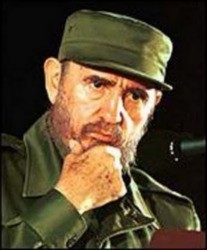
Fidel Castro has relinquished power to his brother Raul Castro, following a medical surgery.
But under his rule, Cuba missed the chance to be a prosperous island. It has been under the dictatorship of a communist regime which sees its neighbour the USA as a giant worthy of fighting instead of becoming liberal and enjoying the benefits of a political and economic alliance with it.

Its proximity from it could have made it a tourist resort for the wealthy Americans. But Fidel Castro opted to make a pact with the Devil by allying with the Soviet Union. During this alliance Castro regime had a honeymoon period. He enjoyed full support from Soviet leaders. Cuba had good social services, for example it had the best health care, not enjoyed in the Soviet Union itself. But Cuba was only exploited by the USSR. It wanted to make of it a window/ façade for other countries to show them the prosperity communism can bring to people.

With the fall of communism, Cuba economic situation plunged. Fidel Castro became like Dr Faustus who had sold his soul to the devil, faced with economic hardship and cajoled with lip services from “progressive” regimes.

Now Cuba altogether needs a surgical operation to recover from its accumulated ills. The continuation of a dictatorship will make no difference if either of the Castros, Fidel or Raul, is in power. What Cubans need is a new era where they can get the breeze of freedom and not a bloody nose when they try to revitalise their political scene with a new, vigorous and young blood, instead of remaining under the grip of the dictatorship of an ageing elite of . An elite whose principle was to free the Cubans from a regime it had deemed reactionary. But it has ended in enslaving them under the banner of propaganda which offers too many promises but very few results on the ground.

Monday, July 31, 2006

Consensus on the Situation in Lebanon

Up to now there seems a consensus in words regarding the situation in Lebanon, especially after Qana tragic incident. The international community is calling for a ceasefire and an end to hostility. Israel government is unanimous on disarming and annihilating Hezbollah politically and militarily, putting this condition to withdraw its forces from Lebanon. Hezbollah is seeking to change the political map of the Middle East by calling for Israel to withdraw from Shebbaa farms. But the animosity between Israel and Hezbollah is so deep that even a territorial settlement will not put an end to the conflict even in the case of a ceasefire. It seems each has the right to exist at the expense of the other as co-existence is a remote possibility.

If there is any comparison to be made for this conflict, it is like a fight in a cowboy film when two heads of a gang get involved in a fight, surrounded by their men or companions who stand watching without intervening until one kills the other or inflict bodily harm on him.

So in this sense, the international community has been standing by to see first which side will have the upper hand before making a gesture that may change the course of the events.

Neighbouring Arab states, especially Syria, can’t intervene militarily as this will mean a declaration of war against Israel. For Syria, it can’t send its troops to Lebanon as its action will be seen as invasion liable to international sanctions. It also knows that it can’t get into such an adventure if it doesn’t have the support of a powerful country like Russia.

Israel is in Lebanon without facing such consequences as it is using the pretext of self-defence after having been “provoked” by Hezbollah which had kidnapped two of its soldiers.

But the powerful countries, especially permanent members of the Security Council, don’t seek an expansion of the conflict. It seems that for them, Hezbollah and Israel in open and unrestrained conflict is a lesser evil than an open war between Israeli army and another Arab army.

The world seems to have reached a consensus that when there is an international crisis of such a magnitude it becomes through time a daily routine, engendering ineffectual debates as it is happening in such areas as Palestinian territories, Iraq and Afghanistan.

When the conflict ends it becomes a history as the Israeli actions against the Palestinians in Southern Lebanon more than 20 years ago or the bloody incidents of Genin in April 2002. So the consensus for the international community seems: watch, talk as much as you can and forget about it altogether.

Friday, July 28, 2006

Hezbollah, a Twist of Arm or Fate?


Hezbollah is a Lebanese Islamist Shiite organisation with a military arm and a civilian arm. It can’t take power over as constitutionally not a single party can form a government. Power sharing is based on the representation of Lebanese population according to their faith. For example the President must be Christian and the Prime Minister a Sunni.

Its objectives are to be the arm and voice of those resisting the existence of Israel or having it as a military superpower in the region. It can enjoy support only among Muslim people as the Christians have their distinct way of life. It is the Christians for example who are reluctant to have Palestinian refugees on their soil. This means they don’t want to be involved in conflicts with Israel.
It will take a long time to disarm Hezbollah. It has acquired a pile of weapons during Syrian presence in Lebanon as it has learnt to make its weapons, especially missiles hitting Israel.

As long as it has support now within Lebanon and around the world, especially from those opposed to the US and Israel, it will remain a force to reckon with. Disarming it will mean to close all Lebanese borders and to make house to house search for weapons. Or to leave no stone unturned. As Israel failed to disarm Hamas which operates in a territory not yet recognised as an independent state, it will find it difficult to disarm Hezbollah which operates in an independent state with internationally recognized borders.

A Show of Strength, How long Can it last?


In this conflict, which is taking place on Lebanon's soil,, Israel is seen as free to do what it deems necessary to defend itself. It has benefited from the toothless world reactions as the international community didn't go as far as to send an international force to protect Lebanon from Israel invasion. Lebanon has become a theatre and the world as spectators who can't come up to the stage to alter the play. Every day becomes a scene and the final act hasn't been played yet for the curtain to fall. Meanwhile, the suspense continues for pro and anti Israel sides.

For Hezbollah, it can't afford to have a long breath to resist Israel without the military and financial support, especially from the outside. With or without Israel, Hezbollah will have to carry its fight even in Lebanon, one of the most liberal countries in the Middle East. Lebanon is a multi-faith society. So it can't impose its beliefs on it without dragging in it into a new civil war.

Lebanon has the right to live in peace. It is known to be one of the most civilised and modern countries in the region. But its geographic situation has made it a battleground between outside forces, especially the Syrians( in the past), the Israelis and the Palestinians.

Hezbollah has to be realistic in its approach in dealing with the situation in Lebanon without counting on countries like Syria and Iran, which gives justification to Israel to widen its military operations in Lebanon, enjoying the support of the US, which sees Hezbollah as a terrorist organisation and not a political wing worthy of treating as a negotiating partner.

Moroccan Government Reaction to Events in Lebanon

Morocco is moderate regarding the conflict in the Middle-East. At the start of the conflict the Moroccan government issued a declaration condemning Israel actions in Lebanon. But Morocco has direct and indirect links with Israel .There are about one million Jews of Moroccan origin, two third of them are living in Israel.

Morocco tries to act as a mediator. Although it has direct link with the Lebanese government it doesnÂ’t have an official link or influence on Hezbollah. There is little it can do to stop the violence. Some Israeli politicians likeShimon Perezss, the former PM, are welcome guests in Morocco. But this not enough to convinceOlmertt to withdraw Israeli forces from Lebanon. For balance Morocco sent aid to Lebanon as a gesture of solidarity in addition to official calls to stop the Israeli military actions in Lebanon.

The Media Dealing with the War in Lebanon


When there is a war, the media step in for coverage. But there are media that are ideologically oriented so they try to edit the events in accordance with their line by using forceful terms to win the hearts and minds of their audience.

The Arab media feel it is a duty to galvanize the Arabs against Israeli actions in Lebanon. Reporting the events objectively without inserting comments on them in favour of the Lebanese by the reporter himself or by an anti-Israeli speaker , also trying to have an interview with an Israeli official on the matter will be considered as a treason, that is siding with Israel or not being involved enough to denounce Israeli military actions. On the Israeli side, before Oslo Peace Accord, any Israeli journalist carrying an interview with a Palestinian politician could face prosecution.

Now that we have media boom through blogs and satellite channels, every side has a large space to put his case through. As many channels have become commercial, first they try to get the feel of their audience and report to them what they want to hear and see. So subjectivity gets over objectivity.

But there are channels like the BBC which does their best to balance their reports. The fact that the debate on the events in Lebanon has attracted thousands of responses, from pro-Israeli to anti-Israeli attitudes, shows that the BBC has won the trust of all sides. It has its reporters on both sides, Lebanon and Israel. Also in the wording of its reports it avoids words that can be considered as biased like "aggression"
or “martyrs”.

Now it has become the responsibility of the audience to make their opinion without seeking someone to tell them how to think. They should get the real background of the story and come with their own analysis. If they can’t make it public, at least they keep it to themselves as a guideline to know how to think instead of being made to think in an imposed way by sides who try to capitalise on events for their own sake.

Prospects of Ending Israel-Hezbollah Conflict


It is ironical that the international community, including US stood watching destructive attacks taking place without intervening in the right time. Now after the damages and reciprocal accusations, it seems the conflicting parties will seek diplomatic victory, showing the other side to be the aggressor. As calls from UN, Arab League, EU failed to stop the bloodshed, the US mission in the Middle East will be met with deaf ears as Israel and Hezbollah are trying to make their points their way.
There can be a lull, but the one that precedes the storm. As Hezbollah and Israel are set to make each other's life a hell, the borders between Lebanon and Israel will remain a mine of potential major conflict as it is happening theses days or just the scene of frequent skirmishes as a provocation for an all out conflict. As usual those who decide remain immune from the consequences of this conflict. Only innocent people who are made to pay for this with their belongings, livelihood or lives.

Polish Immigrants in UK


Poland is known in history as the country that was the cause of the start of WWII after its invasion by Hitler's forces. That was in the first half of the twentieth century. In the second half, the trade union movement in the 80's and the rise of Polish John Paul as the First non Italian Pope gave it more importance in the communist bloc.

Polish migrants in Europe, especially in Britain enjoyed the freedom their compatriots started to enjoy only 15 years ago after the fall of the Soviet Union and hence the fall of communist states from Europe altogether. Western Europe was freed from the Nazis thanks to coalition forces. Eastern Europe was freed from communism thanks to the support of free Western Europe although this took almost half a century to materialise.

The polish at home or in UK can have the same share of freedom but the economic divide is still there. Perhaps the EU, of which Poland is now a member, can bridge the gap.

Tuesday, July 18, 2006

Heterogeneity & Homogeneity in Great Britain


Opening a discussion on Asian communities and others of different backgrounds living in Britain is recalling a mixture for of past and present. It a mixture of nostalgia for the home country and a reflection on having a balanced lifestyle in which background and integration don’t cause identity crisis.

Having communities from different nationalities and cultural backgrounds living in the UK is a reminder of the days in which UK was the biggest empire in the 19th and the first half of the 20th centuries. Regardless of the colonial period which must have had some controversial aspects, it was beneficial for UK and its colonies to come into contact. Britain enriched itself culturally and economically from these colonies. The British were exposed to different lifestyles, with which they were influenced and which must have influenced by modernising if not civilizing these colonies. A striking example is the famous police hat, whose shape originated from Indian traditional turban. Summer carnival is another example of Britain’s cultural heterogeneity.

The British left many of their colonies. But in those colonies they left their legacy. Their “colonies” accompanied them through immigrants. Now there are mainly Asians and African immigrants living in it.

Now we can see the overseas parts of the British Empire severed from it, as they have disintegrated in independent states, but they are still keeping a link with Britain through the Commonwealth. There is also a miniature of the British Empire is in the UK through the Mosaic of immigrant communities from these former colonies.

Saturday, July 15, 2006

When the Poor Ask the Rich : G8 & World Problems


G8 can't alone solve the world problems, especially for African

Rich countries in G8 like the US are providing constant help to poor countries, especially those with scarce materials. There are humanitarian organisations like Oxfam. But such help seems to bear little fruits. It is based essentially on food donation and the like. Such help isn’t the infrastructure needed by poor countries. They need the adequate human resources who have adequate education and full integrity. Politically, there must be full democracy so government at the local and central level coordinate steps to reform and progress.

Instead of asking for generous help from rich countries without being able to use it to good effect because of corruption, countries in need should take the example of G8 and EU to form an economic block to become rich. After all EU started with small and relatively not very rich countries then called Benelux. Now it is a very powerful economic block.
In conclusion, Poor countries should learn to be efficient and self-sufficient.

countries with inefficient governments. Writing off debts for poor countries can be a good start. But such countries should get rid of their ills like corruption. If China, India and Brazil join G8, there will be a new Security Council in disguise. Other third world countries will be faced with a giant block that will set the agenda for them rather than treating them as partners. China, Brazil and India still have huge problems to cater for their own people. So they won’t give priority to other countries whose economy is ailing because of mismanagement. Rich countries like US have their political agenda. They have their economy to sustain in face of international competition and energy rising cost. There are troubled regions in the Middle East. There is the issue of nuclear programmes in North Korea. All this makes poor countries, especially those in Africa, put in the second rank when it comes to solving world problems.Transcript of participation on Haveyoursay about G8 Summit on Sunday, July 16th, 2006 ( see the video link under the title: Is the G8 fit for the purpose)

The role that G8 can play to help poor countries I don’t think that G8 that can solve the problem of poor counties. It is them who should set the basis for that. They should have good government at the local and the central level. They should deal with the problem of corruption. And of course even if they depend on rich countries like the United States this has to do with its foreign policy. If you take, For example, the case of the Middle East, we have three countries that benefit from large aid from the USA, we have Egypt, Israel and Jordan. And this has to do with the peace agreement.

But if you take for example Africa, it is not at the focus of the interest of the United States because up to now, it doesn’t threaten its interests. So it doesn’t care if these countries are plunged in problems or not. Ands let’s remember that former French President François Mitterrand asked that G7 should devote 1% of its gross national product to help poor countries, but this didn’t take place. So if poor countries want to help themselves, of course they should lay the basis through education, through good management. Otherwise of course, all the aid can be just momentary if it doesn’t help these countries to have the basic infrastructure to get a good start.

Thursday, July 13, 2006

Capture: Resistance and Revenge

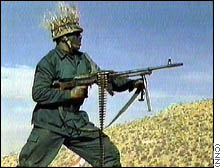
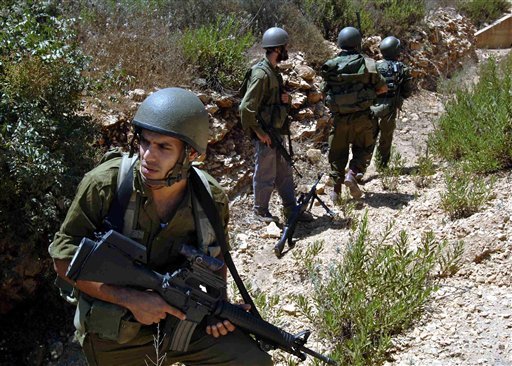
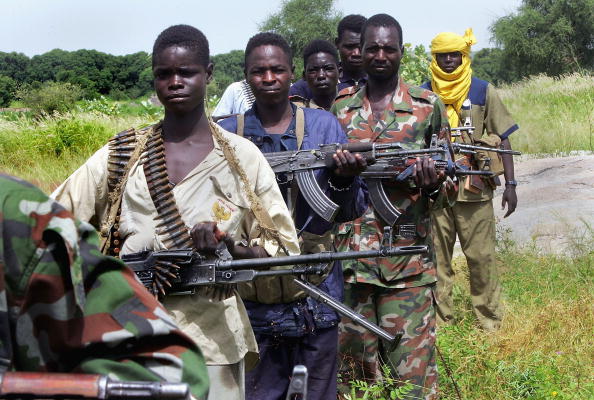
Hezbollah fighters (picture on the left)
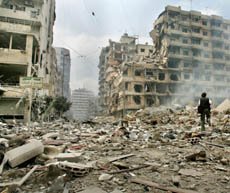
Israeli soldiers in Southern Lebanon

The capture of Israeli soldiers from its southern and northern borders means that factions opposed to Israel in the region are coordinating their method of resistance. Whether it is a coincidence or a planned action, the kidnapping of the Israeli soldiers will heighten tension in the region. Hamas government is apparently controlled by its military wing. The Lebanese government has no control over Hezbollah. Israel is apparently fighting militias, which governments from their countries have no control over them but they are controlled by other countries, mainly, Iran and Syria.

If the worst comes to the worst Israel will be obliged to hit targets in Syria to put pressure on it to put pressure on Hamas and Hezbollah to free the soldiers. These militias know in advance they have little to gain from their actions apart from publicity as a strike from them is met by loads of strikes from Israel.

Perhaps great mediators who have credibility among all sides should step in to solve the problem before skirmishes, limited bombardment turns into an all out war, involving Syria, Iran and insurgents from Iraq. Otherwise we will be in the Middle-East revisited prior to Oslo accord with constant Intifada, suicide attacks and strident measures from Israel in the name of legitimate defence

Wednesday, July 12, 2006

Immigration: Communities and Identity


Many European countries have become melting pot, not to mention the US the biggest pot where you have a blender of all races. UK has a migrating population from its former colonies in Asia like Indians, Pakistanis and Middle-Easters. France’s third world countries immigrants are largely from the French speaking parts of the African continent, including North Africa whose population are racially distinct from the rest of Africa.

France like many European countries with settled immigrants has a mosaic of cultures, embedded with backgrounds from the countries of origin. Muslim communities emanating largely from North Africans have established themselves in France as a distinct community. They still cling to their country of origin. In Morocco, summer is the period for Moroccan immigrants in Europe, to visit to their country. This kind of continuous link has somewhat helped the new generation to have an idea about their country, although a great number of them can’t speak Moroccan Arabic.

One problem that can arise for immigrants is that of identity crisis. The younger generation of immigrants are aware of this origin. Although they can see themselves as integral part of French society, they arte still seen as the descendants of immigrants. This can lead to racial attitudes towards them as they are hotly waged by the Far-Right leader Joan Marie le Pen.

Because of economic hardship due to unemployment or lack of qualification for employment , many immigrants from third world countries – along with their descendants - are left on the margin of society. Spatially there are whole districts in which immigrants constitute the majority and in which they have their distinct ways of life.

Barbés is a live example of France or at least Paris as a melting pot. It is colourful with different races from different parts of the world. But this colourfulness which characterizes France sometimes fade because of the trouble that sparkles among and by immigrants as it happened last year in different French cities.

Tuesday, July 11, 2006

Zidane Reacting to Insult, Temper Loss and Wisdom


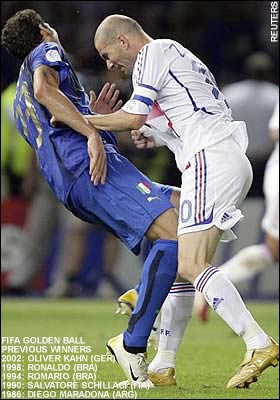
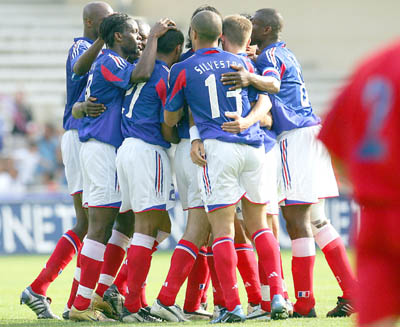
Zindine Zidane should have shown more restraint in a match of paramount importance to his career and to his country following Materazzi’s insult . He may have insulted him to provoke him and to affect his concentration and performance. But Zidane should have learnt from his history of violent behaviour on the pitch. Probably many French would think that if he had kept his calm, France would have won the World Cup. He should have reported him after the match as it was televised and there are lip readers to prove Materazzi insult.

There was an incident in a friendly soccer match between Morocco and France. French goalkeepers Fabien Barthez spat on the face of the Moroccan referee. But he kept his calm and resorted to legal action against him.

In general, there are incidents of scuffle and violent behaviour in sport and politics. Many matches are disrupted because of violence. In some parliaments, there are incidents of chair throwing, slapping and fist punching.

For Zidane, it must have been tragic for him to end his career with a send-off. He wasn’t allowed to stay on the pitch until the end of the match. But he will stay in football history as one of the players who marked modern football. He gas fallen momentarily. But he can rise to glory again. Diego Maradona is a good example of players full of controversy. But he has succeeded in keeping a good place among football fans.

He can find his consolation in being elected as the best player in 2006 World Cup Tournament. In a way, he got credit. The incident of the headbutt- causes and consequences- should remain a bygone incident.

Monday, July 10, 2006

Putin Interview, From engaged Communist to Committed Liberal


Mr Putin during his interview on BBC Haveyoursay has portrayed himself as an assuring president. He sounds like a president most of the world can do business with. He is one of the rare Russian presidents who have succeeded in keeping credibility at home and abroad. His stand on international issues like N.Korea shows that Russia has now become a country seeking international stability. It no longer seeks to use small states like Cuba as it did during the communist era to exercise pressure on the USA in carrying its foreign policy.
His openness on the media is spectacular. Now Russia becoming a liberal country there is no surprise to see Putin addressing world audience in a popular, charismatic and politically calculated manner.

His answering world audience questions is another form of the democratic side of Russia. Thanks to Haveyoursay, the commoners had the chance to have their questions answered directly and openly from a President who was once a member of the secretive and closed KJB.

His interview, to make a parallel, is a reminder of a speech exchange between former American President Reagan who addressed the people of the Soviet Union and former Soviet reformist President Gorbatchev who addressed US people. That was the start of real openness of Russia on the West. Now Russia has become fully a western country.
10/07/2006 19:05

World Cup, Glory and Tragedy /Past & perspective


Zinedine Zidane wouldn’t have resorted to headbutt if he hadn’t been provoked. His getting a red card was a double loss for France. The favourite player ended his football career “tragically”, in that he had to leave to stadium without being able to finish his career as he had planned. The second loss the defeat of France, which must have added more pain to him. But a single moment should not be allowed to ruin all that he has built so far. If he lost with his team the World Cup, at least he won for himself and France the honour of being the best football player in the 2006 World Cup.

But it will be better to see the world Cup for memory and as a repetitive event with different colours for countries hosting it, players being the wizards that sway the crowds and the crowds without whom the players won’t conjure up the demons in them.

As a memory, The World Cup was a continuous moment of expectations, joy and disappointment. The suspense felt during the matches was real and deep. There were moments of shock and surprise. The most memorable is the defeat of favourite Brazil and the qualification of France, which was disappointing at first, for the final match. But the crowds and the spectators made the World Cup an enjoyable moment as it was touching to see people from different countries and races united by the thrill of the game. Germany, the host country, made that possible through good organisation. Congratulations to winner Italy.

For the future, The 2006 World Cup organisation in Germany is a message to South Africa which will host it in 2010. It will have to be level with past organisations in Europe. The reputation of African football as a world event is in its hand. It should not put to shame Africa, struggling to have a place on the world stage. If Africans can do it well by good organisation, they can learn from sport how to organise their economic, political and social life. All is about collective spirit for good goals. They can have the golden goal if they - as a team- know how to target their goal with full precision.

Saturday, July 08, 2006

Remembring July 7 London Bombing


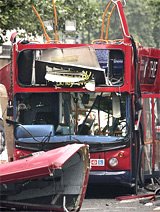
The July 7 bombing should be a day for collective remembrance. It is not the fate of one country or city we should look upon as a single incidence. It is a wake-up call for all those who believe in tolerance and coexistence to unite from one end of the earth to the other, to cut the roots of those who have no concern but to impose their ways even on those who have their established ones.

The terrorists dream of establishing an empire of their own where they can exercise their fantasies, if not their animist religion. As in some primitive religions offering human sacrifices was sacred for continuity. For these new animists under the cover of Islam, they enjoy sacrificing people to quench their lust for blood. For them anyone having modern ways of living or not growing a beard is a legitimate target. Even Islamic countries aren’t immune from their attacks. In Morocco there was Casablanca bombing in 2003. Let’s not forget the victims in other countries like the USA on September 11, Madrid on March 11th, 2004, and Jordan last year year, and the countless victims of religious sectarian violence in Iraq. The list can’t be exhausted if it is to be given in full details.

Terrorism seems to have no borders. It seeks any land to fructify. It attracts the “well-educated”, the “well-to-do” as it attracts the ignorant and the poor. But to counter-attack it, people should learn to unite against it by saving those likely to fall in it and rounding up those likely to be set to carry out their “jihad” , regardless of what damage they can cause to true and reasonable Muslims. Muslims and non-Muslims should extend the hand of friendship to one another instead of pointing fingers of accusation. Doing the contrary will just strengthen the position of the terrorists whose exploitation of the media can draw more support for them.

UPDATE: ( In the aftermath of Mumbai blast)
The terrorist attacks bear similarity in terms of date. They may be the work of the same terrorist groups. A terror expert, psychologist or even a numerologist astrologer should resolve the mystery of the date in which they take places.

In the USA, the attack took place on September 11th.
In Spain, the attack took place on March 11th.
In Mumbai, the attack took place on July 11th.

Does the number 11 have some “veneration” for the terrorists, as it can be their “mascot” in carrying their deadly attacks?

More research should be made on the days of terrorist attacks to establish a "logical" link.

COMMENT published on BBC haveyoursay
Added: Tuesday, 11 July, 2006, 17:34 GMT 18:34 UK
Mumbai blast is another reminder that terrorism has no borders. Coward terrorists seek easy ways to carry their savage attacks. They choose places where there are unarmed and ordinary people to execute their savage attacks. They have no concern for the fate of those trapped in the attacks or the pain they cause to their friends and relatives.

They can't play it fair. They seek no democratic means to put their case through. Democratic countries are their target like India, US and UK.

Abdelilah Boukili, Marrakesh, Morocco
Recommended by 108 people

Thursday, July 06, 2006

Gay Film Censorship in Egypt


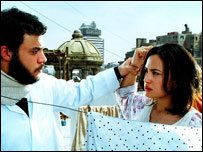
It is a pity any depiction of reality in films is met with taboos. Freedom of expressions should be exercised by all means. If written press can deal with homosexuality, at least by portraying it as it is, the same freedom should be enjoyed by film makers. One conclusion to be drawn from a call to ban the film The Yacoubian Building is that Egyptian viewers aren’t left to choose what film to watch. Cultural creativity is dictated upon them. But taking the cultural context of Egypt many scenes should be banned like belly dancing performed by an almost naked female dancer. It is “unislamic” and erotically provocative. Banning a film because it has allegedly scenes with homosexual context is like denying existing homosexuality in Egyptian society.

In the West, there are many controversial films. The latest is Da Vinci Code. It was more daring in putting into question the fundamental beliefs of the Christians. It was denounced by some. But it was shown. Believers didn’t quit church because of it. I don’t think sensible straight Egyptians will turn gays just by watching an Egyptian film which got more publicity than it should.

For respect of freedom of expression, the film should not be banned. As a compromise, on its poster there should be a “warning” to people of its homosexual content. Then cine-goers take their decision.
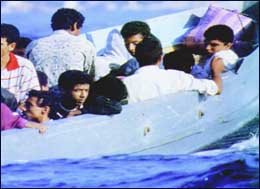
Child Murder, Crime & Punishment


Children are the joy of life. The sight of a young child raises love and the instinctive drive to protect, not to abuse or kill them. Any sensible person, especially, adults and parents see all the children as their children. Even social animals of the same kind endeavour to protect one another. Monkeys, elephants and the like constitute a community where offspring enjoy protection. Even the most peaceful female mother in the animal kingdom becomes ferocious when one of its young is in danger. So let’s imagine the mental condition of parents and relatives deprived inhumanely from a child who can be the reason for their existence.

For the case of the two Belgian girls, any paedophile or child murderer should receive the most severe punishment, including capital punishment. Depriving a child of a normal life in case of paedophilia and of life altogether should be met with equal punishment. Human rights should be enjoyed by people having human qualities. But those who are less than animals should be kept out of society by reclusive imprisonment or by death.

Wednesday, July 05, 2006

North Korea Nuclear Tests, Defiance or Compliance?


It’s unfortunate that arms race is still the sport of many countries. The history of wars and their consequence seems to be just for entertainment – like watching a film of Rambo. War has become the fashion even in video games. But taking fun in using sophisticated weapons in video games where brilliant attack and defence tactics make one score points isn’t the same as involving real soldiers or deadly weapons, especially nuclear weapons.

North Korea is trying to emulate powerful countries like USA in armament. But its strategy is doomed to failure as it doesn’t have the economic structure to sustain a military industry- producing costly nuclear weapons without jeopardizing the welfare of the NK people.

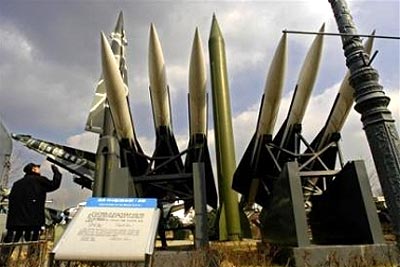
Internally, the NK leaders can subjugate their people through their police state system and making of their leader a sacred personality through personality cult. But they can’t intimidate the international community. They can have their arms. But the world order won’t go their way. There are too many intertwined interests among powerful nations to allow them to offset the current order. The entire world will be watching to curb NK influence, not to foster it.

Resisting Deportation in France


A show of solidarity is needed in all cases. Deporting parents with their children means family disintegration if the children are allowed to stay. Parents returning to their home countries will join the army of the unemployed. Children when joining their parents will have difficulty to adapt in their new schools, especially when it comes to language. A child of Moroccan origin who is 10 years old can’t adapt in a school where, say, Arabic is the main language.

Immigration should be seen from a human aspect. There were success stories in France when a Moroccan mother who had the full support of associations in France to defend the right of immigrants. She was finally allowed to stay after receiving an ultimatum.

France has the problem of child birth. The children of the immigrants can solve this problem. They can stick to their origins through their parents. The French authorities should create good climate for them to assimilate the French culture.

Brandishing an anti-immigration law against any apparently illegal immigrant can go against the French revolutionary principle which is summarized in equality, fraternity & solidarity.

English Tongue to Taste Philadelphia Restaurant Food


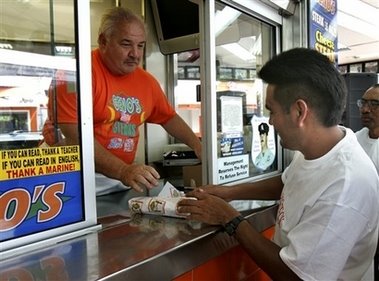
Talking about the imposition of English as a language of communication in a restaurant in Philadelphia, it seems absurd to use language criteria to offer service. It is like a doctor asking a patient to use medical jargon to treat him. The owner of this restaurant can use menus in different languages or a serial for any type of food. Non English speakers can use them to get a good service. Or simply he can turn his restaurant into a club without raising too much controversy.

The restaurant case is a reminder of French President Jacque Chirac leaving a conference in protest when a French delegate was giving his speech in English.
There is also the case of Catalonia where even a Spanish citizen has to speak Catalonian to get a job.

It is good to defend one’s language. But language should not be used as a barrier. Language can be important in some jobs. But basing services on the use of a particular language has two implicit meanings. It means the rejection of the other who lacks a particular linguistic skill. It is asking the customer to be stripped of his identity and to “wear” momentarily the identity of a particular group.

This linguistic “cleansing” is absurd. The lexis of a language is the consequence of the interaction with other cultures. English in areas where there are Hispanics is enriched by Spanish words. If we want to purify English from all words that aren’t English in origin, we should start using pre-Shakespearian English, which was then a dialect with limited vocabulary.

As Kevin said in the blog, communication sometimes fails even when speaking the same language because words and expressions have different connotations according to groups. Maybe this restaurant owner will not be requiring just English, but a certain type of English and accent.

If the owner of this restaurant calls Haveyoursay again, please don’t shock him by telling him that BBC website offers free informatively nutritive services in 33 languages.

Tuesday, July 04, 2006

Football & Racism


Jean-Marie Le Pen seems to have gone out of steam. He tries to gain support in France by attacking immigrants as if France’s social, political and economic ills will end by evicting the immigrants and replacing them with “pure” European race. By calling for a French football team which doesn’t include foreigners, he wants to politicise football. He can also call for “ethnic cleansing” in the French army, security, enterprises and so on as they include foreigners of African and Arab origins.

His racist attitude was echoed on a BBC programme about Zidane, when an immigrant said when the French team wins they call the players French. When they lose they call them blacks and Algerians. For Jean-Marie Le Pen, when the French err it is human. When the immigrants err, they should be wiped out of the French society.
But Jean-Marie Le Pen got the best answer to his attitude when the French team beat Brazil, qualifying for the semi final. The popular response to his comment was from the huge crowds that went out celebrating the victory. It is a message that the French in great majority take their society as multicultural and multiracial for granted . If some immigrants cause trouble in France, it is because of the racial attitudes they suffer from, especially when it comes to employment.

In conclusion, Monsieur Jean-Marie Le Pen has no correct reading of his society because his political vision is blurred by his unjustified racism. I invite him to listen to a song by Sting- addressing Presidents Gorbatchev and Reagan in which he says, “I believe in biology. I don’t believe in ideology.”

Israeli Soldier Kidnapping from Borders, Intransigence & Honour


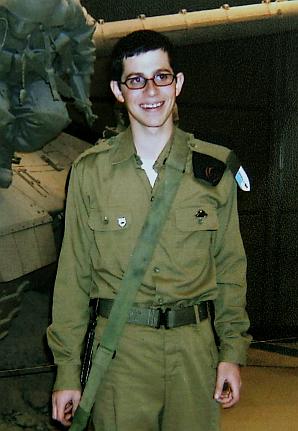
The Israeli army must have felt humiliated by the infiltration of Palestinian fighters into its military base, escaping from it after killing two soldiers and kidnapping another. This can put in question their level of vigilance. But politically, both the Israeli and the Palestinians should be pragmatic. The fight should not go on for the sake of a soldier. It should be stopped for the sake of peace. Otherwise, more causalities are to be expected on both sides through attacks and suicide attacks.

Taking the tone of both Hamas and Israeli officials, it seems unlikely the situation will calm down. Hamas refusing to recognise Israel is diplomatically having its back to the wall through the sanctions of the some Quartet members –US & EU – the main aid donors. Hamas has then only the card of continuous struggle to make its presence felt internationally and to keep its credibility among the voters who brought it to government- a government that officiated in paper, which has more link with the media than with influential governments.

As the situation stands, there are two antagonists set to use all means risk everything to defend their principles in a world standing as a witness at worst and coming up with advice for both sides at best .

Monday, July 03, 2006

Role Models for Muslims in Sport


In the Muslim world, there aren’t many figures that are considered as role models for young Muslims. In sport, for example, the young Muslims tend to favour European football championship and so the stars in these teams eclipse the championships in other Muslim countries because of the level of performance. Zidane wouldn’t have become a role model if he wasn’t a player in Real Madrid, the focus of sport media. Being a role model has to do with favourable publicity in addition to performance.

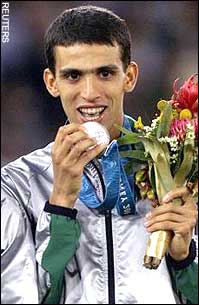
But there were famous athletes from the Muslim world, especially North Africa. From Algeria there was Morseli, From Morocco there were athletes like Aouita, Nawal Al Moutawakkil and Hisham Al Garrouj .These became world famous, especially by winning Olympic gold medals.. Late King Hassan II of Morocco once said that people outside Morocco knew Aouita but not the king of Morocco. Hisham Al Garrouj before his retirement was the focus of analysts and spectators during the championships. He stole the light during his participations.

Such Arab athletes -representing the Muslim World in international competitions - will be remembered as world record breakers and gold medallists, especially in the Olympic Games