Language is a part of one’s identity. Language is still a source of power. Acquiring a language can open different opportunities. But it is the practicality of a language that makes it dominant. There are very powerful economic countries whose languages aren’t as widespread as English. In China, due to its economic boom and openness on the outside world, there are more than 300 million English learners. The Chinese can export their products, but they can’t export their language at a scale as large as that of English. The same applies to Japan and Germany. French is retreating. This is embarrassing for France which is spending more and more money to keep French “afloat” at least in its former colonies through its cultural centres.
However there are many languages that are marginalised even by their own speakers in favour of a dominant language. Many countries have tens if not hundreds languages like Nigeria and India. Deciding a national language is always linked to political considerations and influence.
In the case of Morocco, although classical Arabic is the national language, there is Moroccan Arabic (which is in most cases understood just by the Moroccans and to some extents by the Algerians.) as there is Amazigh which is made of three main different dialects.
However, in Morocco, foreign languages mainly French, English and Spanish are also important, especially in the world of business. Many jobs, especially in business and tourism require at least one foreign language. Administrative papers are in most cases both in Arabic and French.
At the personal level, speaking more than one language is an opportunity to be open on different cultures. Personally I can speak three languages, Arabic French and English. Still I have the wish to learn Spanish. I more than once made myself the promise to learn it but I failed. Still I enjoy its rhythm without understanding a single word.
In general, a language is a source of power if it is linked to an economic and cultural activity. Just speaking multiple languages doesn’t make one multimillionaire.
Tuesday, April 21, 2009


Monday, April 20, 2009
Should Politicians do God?
Leaders in countries where religion is still the rule of conduct are considered as representatives of God and should act according to his teachings.
Conceding that politicians should do God, it remains which God teachings they should follow, especially in multi-faith societies.
Politicians aren’t perfect people. They are prone to mistakes and weaknesses and thus they can’t do God. This conflicts with democratic values as politicians should do what people , not what God, ask them to do.
Turning politicians into God-figures means they can be above reproach and anyone opposing them will be punished.
There are enough God-figures around the world in dictatorial regimes as in North Korea. Currently the world needs much less of them, not more.
Religion if incorporated into politics can be used as a tool to repress different views. There are theocratic regimes which stifle all sorts of freedoms in the name of religion whose teachings they interpret according to their scheme to hold to power.
The excess of incorporating religion in politics will turn Christian countries to the Puritan era as it can turn Muslim countries to Taliban rule.
Religion should remain an individual matter; especially, in multi-faith societies. Imposing a unique brand of religion is likely to cause a clash among sections of society with different religious views and beliefs.
Any country should have a constitution that guarantees democratic values. Empowering religious institutions over the democratically elected ones will turn societies into theocratic where religious dissent can lead to persecution. As such, multi-faith societies should be governed by secular laws and religion should remain a personal matter.
Sunday, April 19, 2009
Why are there are so few openly gay sport stars?
John Amaechi played for the Cleveland Cavaliers, Orlando Magic, LA Lakers and Utah Jazz , but it was only after he stopped playing that he revealed that he is gay. The question is why there are so few openly gay sports stars?
As long as the majority of fans are heterosexual, they ‘re unlikely to consider a gay player as their role model. It’s one thing to accept gays within society, but it is another to take them as models. Gay player had better hide their sexual orientation.
As a compromise, as there are gay clubs, there should be gay teams watched by gay spectators. At least there will be no embarrassment on either side.
In the world of art, people like Elton John didn’t reveal they were gays at the start of their careers. It took them time to do so as it took time for their fans to accept them. Maybe for gay sport stars, they have to wait for their fans to accept them for what they are and to make a distinction between a player on the field and in private life.
And let’s not forget the commercial side. There are sponsors, advertisers as well clubs who refuse gay sportsmen because they may just deter fans from whom they can generate revenues.
The attitude towards gay sportsmen still has to do with ethics, popularity and business.
As long as the majority of fans are heterosexual, they ‘re unlikely to consider a gay player as their role model. It’s one thing to accept gays within society, but it is another to take them as models. Gay player had better hide their sexual orientation.
As a compromise, as there are gay clubs, there should be gay teams watched by gay spectators. At least there will be no embarrassment on either side.
In the world of art, people like Elton John didn’t reveal they were gays at the start of their careers. It took them time to do so as it took time for their fans to accept them. Maybe for gay sport stars, they have to wait for their fans to accept them for what they are and to make a distinction between a player on the field and in private life.
And let’s not forget the commercial side. There are sponsors, advertisers as well clubs who refuse gay sportsmen because they may just deter fans from whom they can generate revenues.
The attitude towards gay sportsmen still has to do with ethics, popularity and business.
Thursday, April 02, 2009
Rambling thoughts on the world economy following G20 summit in London
The way out of the current recession is to regulate the banks and the markets without fettering free trade movement. Printing more money without regulating the markets will simply result in two digit inflation which will cause further economic problems and deficits. Consumption can be enhanced when people feel financially secure. Without financial security, consumers will continue to tighten their belts.
G20 must find tangible mechanisms to put the world economy on the right track for both producers and consumers to feel confident and to keep the economic wheel rolling at reasonable speed. The current crisis has primarily been caused by unrefrained investment and consumption based on speculation which has made the economic wheel come to a relative halt after the unexpected crush.
Rich countries still have the means to redress the current economic downturn, not without sacrificing millions of jobs as it is unlikely that all can be fixed with the strike of a magic wand.
In this dire economic crisis, despite the outward concern for the global economy, each country will have the motto of “charity begins at home.”Poor countries are likely to suffer most as their economies are mainly based on exporting raw materials and international aid.
It’s hopeful that the world leaders at G20 can come up with a new Marshal Plan that can save all the countries, poor and rich.
G20 will have no meaning if it is going to be remembered just as a moment of outspoken rallies by those disenchanted with the failures of capitalism and reassurances by politicians without tangible results that can put the world economy on the right track.
Third world countries as a whole have failed to create economic functional blocs, with few exceptions like ASEAN. Third world countries are just dreaming of becoming economic blocs as they have just names. One example is the Arab Maghreb Union whose purpose since its creation in 1989 was to create economic integration between North African countries ( Morocco, Mauritania, Algeria, Tunisia and Libya). So far there is little economic exchange between these countries compared to their potentials and complementaries and geographic proximity.Not to mention the dream of the United States of Africa.
In short poor countries should work out the means to integrate their economies and to consider their economic exchanges with rich countries as one of their priorities and THE priority.
The current economic mess was fundamentally created by Western financial institutions and the apparent total disengagement of Western governments until it was too late. It seems the rest of the world has to pay with them, especially oil producing countries, like Iran and Venezuela, which now have to reshuffle their domestic economic plans.
But the fundamental question is, ” What can G20 do to help when corrupt leaders in third world countries simply squander the wealth assets of their countries to enrich themselves by impoverishing their already impoverished peoples?”
Maybe rich countries can make things better in the long run. But countries suffering from corrupt leadership still need to clean their houses for general prosperity.
Thursday, March 26, 2009
Morning after pills for 11 year olds sound like a good idea?
These schools in the UK will allow girls of 11 and upwards to request the morning after pill by sending a text to a nurse.
Why shouldn’t be an inquiry to know why girls as old as 11 have sex with? Encouraging very young girls to have sex by allowing them to have the morning pills is a straight encouragement to paedophilia.
It can be acceptable for girls as old as 11 to use cosmetics and wear fashionable clothes- although this can be seen by some as preparing them for sex predators- but turning a blind eye to their use of morning pills without bothering to offer them advice about the risks of fully engaging in sex at such an early age shows the irresponsibility of parents and society as a whole.
It’s funny that girls can’t legally buy cigarettes and alcohol, but they can get hold of morning pills. If this continues, this means one day we may hear of an eleven-year old girl legally married to an adult!
March 26, 2009 at 14 :30
Children should be encouraged to be independent but not too independent as they still lack adult experience. Their parents can be for them a model. But parents needn’t force their children to be according to their wishes as personalities differ. Children still need parental protection financially and emotionally. But they aren’t robots that can be programmed and are expected to function according to their programming. A child isn’t just a part of his/her family but of society as a whole.
Children should be brought up to enjoy their childhood and to be prepared for the future. As such, they shouldn’t be bullied by their parents into adopting a way of thinking but they should be encouraged to have healthy style of thinking that can prepare them to face their reality and the reality of the world around them.After all, in view of the complex world in which they live and the multifaceted exposures they have, children can be seen as small adults. They need just time to reach full adulthood. They should be entitled to pursue their dreams as long as they don’t bear in them the risk of becoming nightmares that can disrupt the whole of their lives.
Children can be affected by the current economic downturn because of growing materialism in society. Children are exposed to consumerism at a very low age either from their parents or advertisements directed at them. In the past, it was enough for children to have a playground and a ball to have fun. Now with the spread of electronic gadgets and the Internet, many children can’t live without pocket money. I think it’s time for them to learn to live in the warmth of family life and friendship without the unnecessary and sometimes frivolous luxuries. When grownup, they can make and have their own money.
Children should be encouraged to be independent but not too independent as they still lack adult experience. Their parents can be for them a model. But parents needn’t force their children to be according to their wishes as personalities differ. Children still need parental protection financially and emotionally. But they aren’t robots that can be programmed and are expected to function according to their programming. A child isn’t just a part of his/her family but of society as a whole.
Children should be brought up to enjoy their childhood and to be prepared for the future. As such, they shouldn’t be bullied by their parents into adopting a way of thinking but they should be encouraged to have healthy style of thinking that can prepare them to face their reality and the reality of the world around them.After all, in view of the complex world in which they live and the multifaceted exposures they have, children can be seen as small adults. They need just time to reach full adulthood. They should be entitled to pursue their dreams as long as they don’t bear in them the risk of becoming nightmares that can disrupt the whole of their lives.
Children can be affected by the current economic downturn because of growing materialism in society. Children are exposed to consumerism at a very low age either from their parents or advertisements directed at them. In the past, it was enough for children to have a playground and a ball to have fun. Now with the spread of electronic gadgets and the Internet, many children can’t live without pocket money. I think it’s time for them to learn to live in the warmth of family life and friendship without the unnecessary and sometimes frivolous luxuries. When grownup, they can make and have their own money.
Tuesday, March 24, 2009
Sport and Terrorism
The decision to shift the IPL away from India for security reasons should be seen as a victory for the terrorists, which will give them as much publicity as when they would succeed in mounting a terrorist attack. Their aim is to instil fear on all levels.
On the other side, it shows that India is still a target of terrorist attacks from within and outside, especially from Pakistan. The terrorists there have two principal aims: to destabilize the Pakistani government and to cause it to have sour relationships with India. It’s not in their interest that Pakistan should be a stable country with excellent relations with India, as this means they can be easily defeated.
On the whole, it’s better to have India concentrate on its elections, which concern the whole country, than to couple them with a sporting event that can make the majority of Indians have their hands on their hearts in fear for a possible terrorist nightmare.
On the other side, it shows that India is still a target of terrorist attacks from within and outside, especially from Pakistan. The terrorists there have two principal aims: to destabilize the Pakistani government and to cause it to have sour relationships with India. It’s not in their interest that Pakistan should be a stable country with excellent relations with India, as this means they can be easily defeated.
On the whole, it’s better to have India concentrate on its elections, which concern the whole country, than to couple them with a sporting event that can make the majority of Indians have their hands on their hearts in fear for a possible terrorist nightmare.
Friday, March 20, 2009
Religion and politics
Religion if incorporated into politics can be used as a tool to repress different views. There are theocratic regimes which stifle all sorts of freedoms in the name of religion whose teachings they interpret according to their scheme to hold to power.
The excess of incorporating religion in politics will turn Christian countries to the Puritan era as it can turn Muslim countries to Taliban rule.
Religion should remain an individual matter; especially, in multi-faith societies. Imposing a unique brand of religion is likely to cause a clash among sections of society with different religious views and beliefs.
Any country should have a constitution that guarantees democratic values. Empowering religious institutions over the democratically elected ones will turn societies into theocratic where religious dissent can lead to persecution. As such, multi-faith societies should be governed by secular laws and religion should remain a personal matter.
The excess of incorporating religion in politics will turn Christian countries to the Puritan era as it can turn Muslim countries to Taliban rule.
Religion should remain an individual matter; especially, in multi-faith societies. Imposing a unique brand of religion is likely to cause a clash among sections of society with different religious views and beliefs.
Any country should have a constitution that guarantees democratic values. Empowering religious institutions over the democratically elected ones will turn societies into theocratic where religious dissent can lead to persecution. As such, multi-faith societies should be governed by secular laws and religion should remain a personal matter.
Wednesday, February 11, 2009
Israeli elections and Middle East peace
The Israelis have gone to the polls to elect their new government. The main issue appears to be security. But there are other issues like the economy and education. For the outside world, what matters is how Israel can be a genuine peace partner in the volatile region of the Middle East that has been regularly going from one crisis to another.
Israel can pride itself on being the most democratic country in the Middle East, but so far it has failed to grant the Palestinians an independent state and to reach a settlement with Syria over the Golan Heights. These are some of the reasons why it has many enemies in the Muslim and the Arab worlds.
There are many questions that should be answered:
1- Can Israel survive without its close alliance with the United States from which it gets the most militarily and financial support?
2- How serious is Israel about an independent Palestinian State?
3- Does it envisage sharing Jerusalem with an independent Palestinian State?
4- Concerning water, how can it be a source of tension between Israel and Jordan?
5- How deeply is Israel affected by the current financial crisis?
6- How Judaism is still important in Israeli society. Is it drifting to more secularism?
There are some who argue that Israel is the 51st state of the USA in view of the huge military, diplomatic and economic support it gets from it. The Israelis may be complacent about the living and democratic standards they’re living. They may view their political leaders as the same despite the political parties they stand for.
Perhaps, the Israeli leaders are good at making wars against their enemies inside and outside Israel as their war machine is the most powerful in the region. But they are also shrewd politicians when it comes to negotiations with the Palestinians. As long as the Israeli politicians become united when it comes to wars, the daily running of the country is left to take care of itself regardless of which party is in power.
Despite the apparent apathy on the part of the Israeli voters, Israel can survive only through democracy. Without it, the differences between politicians can generate into violent political and social instability, a situation Israel can’t afford if it wants to survive in a volatile regions where the “paws” of many countries and political movements are directed against it.
However, Israel should be democratic towards the Palestinians living within Israel or in the Palestinian territories, many of whom pay dearly because of its differences with their political leaders. The recent events in Gaza - military assaults and blockades by Israel- are a case in point.
The Palestinian issue is a strong card in the hands of Israeli politicians with which they can sway the voters and appeal to their nationalism. No Israeli politician seems ready to risk his/her political future by going beyond asserting the need for peace with the Palestinians and the Arab countries. As for territorial matters, there can be signing of agreements, like the 1994 Oslo accord, which fall short of being implemented because of lack of mutual trust.
Perhaps for the Israelis, delaying any compromise is an opportunity to give nothing and to maintain negotiations at the staring point despite the apparent rounds of talks that have been going for years.
It’s no wonder that the public inside and outside Israel have grown sceptical of any settlement between the Israelis and their opponents in the Arab world as each side portrays the other as uncompromising and offering very little to get too much. Maintaining one’s ground is the best mean for attack and offence. For how long will this continue? Only the politicians- from all sides - who hide their cards can decide.
Not reaching a compromise about standing issues concerning the Golan Heights, Jerusalem and an independent Palestinian state will maintain Israel in a perpetual state of war. Its very existence will depend not just on having a strong economy but also the strongest army in the region.
In the Arab world, Israel has so far direct diplomatic relations just with Egypt and Jordan which are subjects to ups and downs because of the fluctuations in the Palestinian territories. It will be better for all parties to reach a lasting compromise by establishing bridges of trust and by each getting one’s due rights without infringing the rights of the others.
Here is an audio extract of Israelis discussing the issue of Iran and Judaism in Israeli society
Ros Atkins announcing the presentation of BBC WHYS show from Tel Aviv
Ros Atkins from of BBC WHYS introducing the show
Israel can pride itself on being the most democratic country in the Middle East, but so far it has failed to grant the Palestinians an independent state and to reach a settlement with Syria over the Golan Heights. These are some of the reasons why it has many enemies in the Muslim and the Arab worlds.
There are many questions that should be answered:
1- Can Israel survive without its close alliance with the United States from which it gets the most militarily and financial support?
2- How serious is Israel about an independent Palestinian State?
3- Does it envisage sharing Jerusalem with an independent Palestinian State?
4- Concerning water, how can it be a source of tension between Israel and Jordan?
5- How deeply is Israel affected by the current financial crisis?
6- How Judaism is still important in Israeli society. Is it drifting to more secularism?
There are some who argue that Israel is the 51st state of the USA in view of the huge military, diplomatic and economic support it gets from it. The Israelis may be complacent about the living and democratic standards they’re living. They may view their political leaders as the same despite the political parties they stand for.
Perhaps, the Israeli leaders are good at making wars against their enemies inside and outside Israel as their war machine is the most powerful in the region. But they are also shrewd politicians when it comes to negotiations with the Palestinians. As long as the Israeli politicians become united when it comes to wars, the daily running of the country is left to take care of itself regardless of which party is in power.
Despite the apparent apathy on the part of the Israeli voters, Israel can survive only through democracy. Without it, the differences between politicians can generate into violent political and social instability, a situation Israel can’t afford if it wants to survive in a volatile regions where the “paws” of many countries and political movements are directed against it.
However, Israel should be democratic towards the Palestinians living within Israel or in the Palestinian territories, many of whom pay dearly because of its differences with their political leaders. The recent events in Gaza - military assaults and blockades by Israel- are a case in point.
The Palestinian issue is a strong card in the hands of Israeli politicians with which they can sway the voters and appeal to their nationalism. No Israeli politician seems ready to risk his/her political future by going beyond asserting the need for peace with the Palestinians and the Arab countries. As for territorial matters, there can be signing of agreements, like the 1994 Oslo accord, which fall short of being implemented because of lack of mutual trust.
Perhaps for the Israelis, delaying any compromise is an opportunity to give nothing and to maintain negotiations at the staring point despite the apparent rounds of talks that have been going for years.
It’s no wonder that the public inside and outside Israel have grown sceptical of any settlement between the Israelis and their opponents in the Arab world as each side portrays the other as uncompromising and offering very little to get too much. Maintaining one’s ground is the best mean for attack and offence. For how long will this continue? Only the politicians- from all sides - who hide their cards can decide.
Not reaching a compromise about standing issues concerning the Golan Heights, Jerusalem and an independent Palestinian state will maintain Israel in a perpetual state of war. Its very existence will depend not just on having a strong economy but also the strongest army in the region.
In the Arab world, Israel has so far direct diplomatic relations just with Egypt and Jordan which are subjects to ups and downs because of the fluctuations in the Palestinian territories. It will be better for all parties to reach a lasting compromise by establishing bridges of trust and by each getting one’s due rights without infringing the rights of the others.
Here is an audio extract of Israelis discussing the issue of Iran and Judaism in Israeli society
|
Ros Atkins announcing the presentation of BBC WHYS show from Tel Aviv
Ros Atkins from of BBC WHYS introducing the show
Sunday, February 01, 2009
War and peace for Iran and the USA
In his first interview with a foreign media outlet – Al-Arabiya television – President Barack Obama promised to extend the hand of American diplomacy to Tehran if the regime froze its nuclear programme.
Despite welcoming the change of tone in US foreign policy towards his country, Iran’s president demanded an apology for past US “crimes” committed against Iran.
Iran should equally apologize to the United States for the 52 American hostages it took after the Islamic Revolution in 1979, before it asks the US to apologize for the economic sanctions it has successively imposed on it.
If Iran seeks good relations with the US both should work to build trust between them. Continuing diplomatic conflict will delay the resolutions of many problems affecting the region, especially the conflicts between Israel and Hamas on one hand and Israel and Hezbollah on the other.
The differences between Iran and the US are so deep extending from Iran nuclear program to the attitudes towards the conflicts in the Middle East, involving Israel with Hamas, Hezbullah and Syria. Iran has strong relations with these. It can exert strong influence on Hamas and Hezbullah either way as long as it gets or doesn’t get what it wants. It’s using them as a tool to indirectly wage wars against Israel.
In view of this complex differences regulating Iran’s relations with the US and Israel , there is so much hard work to do on all sides to heal the rifts that has been taking place since 1979.
For the US and Iran, they can be friends if they leave the past behind them and turn a new page. However the harsh tone of Iranian president in his last speech in which he demanded an apology from the US for its “crimes” against his country and the extended hand of friendship from Obama to the Iranian leaders shows that there is “love” just from one side. The rift whose causes are much more complex can’t be healed easily.
Are octuplets a blessing or a burden?
A US woman has given birth to eight babies , becoming just the second person recorded in the US to have delivered a set of living octuplets.
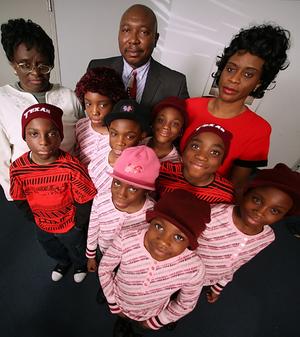
There was the case of a Russian mother who gave birth to 69 children in the span of 40 years from 1725 to 1765.
Having so many babies at the same time can be a blessing if the parents have the means and the time to support them. It can be fantastic to have a big family all of a sudden. But the effort and the cost of raising a child in today’s world isn’t so easy.
For many parents, the beauty of having many children is that they come one by one. At least parents enjoy having babies over a period of time.
For woman who is past 40 and has never had children before, it must be a good thing for her to have a triplet or a quadruplet as she will have secured having more than one child before the menopause. For a young mother, it must be difficult as she will have to care for more than one baby at a time, which can be burden on her physical health, mainly when it comes to sleep deprivation during the first years of the new born babies.
Local jobs and foreign investments
Hundreds of employees staged walkouts across the UK over the use of foreign staff at a Lincolnshire refinery.
Should jobs go to local workers?
It’s laudable that local people should have local jobs. But there are jobs that the locals disdain to do like construction and farming. The Gulf States have to rely on foreign workers mainly from the Indian Subcontinent because they have relatively a small population compared to the needed development activities and the locals can accept only activities related to office work or trade, which has resulted in high unemployment among the young.
A protectionist approach isn’t the best solution as this means the world economy will shrink even further because of reduced economic exchanges. This will mainly have negative effect on poor countries whose economy depends on exports to rich countries and remittance from their immigrant populations. Countries should instead protect local jobs as long as there are those who can do them efficiently. Depriving the locals from them will lead just to social unrest.
However, there are jobs that only foreigners are renowned to be good at. In the UK, Polish worker , for example, are still highly needed for repair services. This leads to ask which category of foreign workers should be disposed of for the benefit of the locals.
Protectionism will mean the end of many economic agreements between different countries as it will mean the end of many economic blocs like the EU,G8 and ASIAN.
What is needed is economic restructuring that can allow national economies to grow and to expand beyond the borders. The biggest losers of protectionism will be the emerging economies, like those of India and China, whose success largely depend on exports.
It’s no good news for anyone that the world economy should shrink as it will put backward many poor and developing countries as it will lead a fall in the living standard of the citizens of developed country. There should be mechanism to revive the national economy without jeopardizing the existing international trade agreements.
In Morocco, there are many sectors that are managed by foreign companies although the workers are all Moroccans, except at the administrative level where there are some foreigners.
In Casablanca, the largest city in Morocco, water , electricity , sewage and litter collection are managed by French companies. In Marrakesh, all the buses are managed by a Spanish company because the municipality company went bankrupt because of mismanagement.
In the case of Morocco, there are locals who do most of the jobs. There are very few foreign workers. This means, it’s possible to create jobs for the locals, but there are still sectors that should be managed by foreign companies because of the lack of transparency and good managements when they are in the hands of the nationals.
Friday, January 30, 2009
Compensating human rights victims
Many countries around the worlds have tried to turn a new page concerning human right abuses in the past as a means to foster national reconciliation and to compensate the victims or their relatives.
Morocco is the first Arab country to compensate for the victims of human rights abuses between independence in 1956 and the end of King Hassan’s reign in 1999, during which 592 people were killed, the Equity and Reconciliation Committee. Some received more than USD 300,000 in compensation.
Money is just a means to compensate the victims, but there is no money to compensate for the lost years in imprisonment under torture. Many leave the prison in critical health conditions and die just after receiving their compensation.
For Morocco, the compensation of former victims of human rights abuses has been a success. Outstanding political prisoners have become involved in politics, by joining existing or newly formed political parties. Many exiled politicians returned. At least the compensations have secured political stability in Morocco – although the Islamists, hundreds of whom are now in prison, still constitute a dangerous factor for the regime in Morocco.
Monday, January 26, 2009
Is the BBC right not to air DEC Gaza appeal?
The BBC is under pressure to air a charity appeal for aid to
This has led to different responses from different personalities as well as from the public.
The BBC controversial position on whether it should show the DEC appeal is giving it more publicity than it needs as this has become one of top news reports on the BBC and other major news channels.
Those who support the BBC decision can argue that the BBC should keep its impartiality by reporting the situation in
The BBC has to keep its impartiality when it comes to political conflicts. The tragic events in
It's enough for the BBC to make objective reporting about the ongoing events in
However there must be exceptions when human lives are in danger. It’s not a question of being or not being impartial but being indifferent. As there are viewers who shrug at the sight of suffering and dying people, there are others who feel compassion. These people should be given a chance to help through the DEC appeal. That could have gone unnoticed if the BBC wasn’t adamant that it’s out of question to show the appeal on air.
Tony Benn of DEC said "If you wont broadcast the Gaza
Sunday, January 11, 2009
Gaza and the international community
As long as Israel is ready to kill the civilian Palestinians which it sees as collateral damage and as long as Hamas sees the death of the Palestinians as martyrs for its cause, there will be no lull between the two sides.
Hatred between Hamas and Israel is so deep that no UN resolution can stop them fighting. Each side will find an excuse to kill and attack in the name of survival.
Hamas can keep its morale high through protests worldwide, which are likely to change nothing. Israel will continue its attacks knowing in advance that its fight will be limited within Gaza as no Arab country will step in to fight with it and the international forces can’t get in to establish peace without its agreement.
As such the UN resolutions whether soft or harsh will have no effect on Israel policies as countless events similar to those in Gaza have shown.
On the whole, the Israeli actions in Gaza are likely to deepen the hatred towards Israel and to make Jews around the world feel unsafe. They can be the source of growing of anti-Semitism.
However it’s not too late to close this Gaza bloody chapter if all the parties come to their senses and agree to a ceasefire which should be sustained by allowing people in Gaza the freedom of movement and to be guaranteed their basic needs. Mutual and sustained attacks are likely to prolong the damages on both sides and to make any peace agreement unachievable.
Tuesday, January 06, 2009
Israel on the defence against defenceless Palestinians
The Israeli politicians say that their war on Hamas will go on whatever it takes. This means they have given themselves the right to have a free hand. But as long as there are the laws of wars, going beyond them must be a crime against humanity.
However as long as it’s unlikely that Israel can face international sanctions from its allies, mainly the EU and the USA - its major economic and political partners, it will continue to bombard Gaza at will. The irony is that NATO was able to intervene militarily in ex-Yugoslavia to stop ethnic cleansing there and the international forces led by the USA invaded in Iraq. Now the international community is watching Israel pound its bombs in civilian areas and “calmly” asking for a ceasefire. As such Israel isn’t just defending itself but it’s being defended by its allies on behalf of which it is waging a war against Hamas.
In short, Israel in its history of bloody attacks is used to the pattern of diplomatic condemnations and angry wide public protests. It has a deaf ear to them because the drones of the engines of its weapons and the sounds of the explosion are louder than them. Israel doesn’t need justifications as it has no one to account for its actions. It’s the law of the strong against the weak, not the modern laws of war.
Israel has the right to defend itself, but not at the expense of the innocent civilians caught in the fire attacks. The Israelis exposed to Hamas rockets have only fear to deal with, considering the casualties when contrasting 14 Israeli killed by Hamas rockets versus 5,000 Palestinians killed by Israel sophisticated weapons in the past seven years.
Israel can reserve the right to respond to those who attack it, but not through indiscriminate killing which it euphemistically can call collateral damage.
The best way for Israel to defend itself is not to allow extremism grow around its borders and beyond, by being realistic about its approaches to its conflict with the Palestinians. One of the approaches can be for it to speed up the establishment of a Palestinian state and not to use Hamas and Iran as an excuse for further delays.
World Have your Say on TV
Part One
Part Two
Part Three
Part Four
Tuesday, December 30, 2008
Gaza situation, who's to blame?
The events in Gaza are a trying time for everyone. It’s not politics. It’s unrestrained actions with full military might versus unarmed civilians caught in the feud between two opposite ideologies.
When civilized negotiations fail, there is room for bloody actions which resolve nothing but just increase the enmity between the two sides.
It’s sad to see that only atrocities can unite the Israelis and the Palestinians against each other when it is hard for them to achieve lasting peace.
From what it is seen, Israel is facing criticism from the international community over its attacks in Gaza, not because of siding with Hamas but because of the casualties that were caught in its fires intended for Hamas locations and fighters.
When there are attacks, the Palestinians are sure to stand against Israel. What can decide the popularity of Hamas are free and fair elections within the Palestinian territories to see if people in Gaza want to be ruled by Hamas or to have a new leadership.
Hamas can be a news star during the Israeli attacks. But the question that remains if Hamas policies are the only possible ones to settle the Israeli-Palestinian conflict. If not the Palestinians should have had the chance to have their say about Hamas’s stay in power before things developed into bloody actions.
What can solve the Palestinian problem is democracy among the Palestinians and fruitful negotiations between Israel and the Palestinians.
There are many questions that should be answered vis-à-vis these attacks:
1- In such a situation who should be accused of crime against humanity: is it Israel who is making much more casualties among the civilians than the armed groups or is it Hamas who has its weapons and weapon factories in densely populate areas?
2- Should Egypt be accountable for turning a blind eye to the tunnels from which weapons are smuggled or for closing its borders with Gaza, making it easy for Israel to impose its total blockade on Gaza?
3- Wouldn’t it have been better for Israel to mount a ground invasion of Gaza and arrest Hamas leaders and armed factions instead of mounting air strikes that randomly killed innocent civilians?
4- How will such attacks in Gaza affect Israel relations with moderate Arab countries and will this mean its contact with them will be low-key?
Hamas can be strengthened only by the desperate Palestinians, especially those living in Gaza. These have nothing to lose as they feel they’re living in a collective prison under blockade. Their life can have meaning by fighting and dying for the Hamas cause.
But Hamas getting strength from despair can’t solve the Palestinian problem which is politically very complex. There must be political solutions through negotiations and not by Hamas Qassam rockets and Israeli destructive and deadly air attacks.
Monday, December 22, 2008
Is it the age of the gren car?
 Cars have become a necessity. Despite the current crisis in its industry, the car will continue to attract investment as cities are continuing to grow. But the culture of transportation should change by opting for common transport , which should be punctual and comfortable for the passengers.
It’s the dream to have a green car as it will solve many environmental problems and make environmentally conscientious drivers not feel guilty about driving. It’s a change of mentality that is needed to opt for green cars despite their possible shortcomings compared with the current cars. This can be possible if the car companies can invest in green alternatives and the consumers are ready to make sacrifices by paying more and not consider big speed as a priority in driving.
It’s unimaginable to think that it’s the end of the age of the car as it was first made to stay with us. Cars have changed throughout the ages since their creation. The car industry is vital for the economy, especially in the USA where 10% of the jobs are related to it in one way or another.
What is needed is an approach to car industry in terms of production and marketing. There may be the possibility to create fast cars. But the mismanagements of the car industry can slow the economy. The cars are here to stay. They can break down from time to time. But the economy can’t afford to keep breaking down. It needs a strong engine to keep it roaring. It’s the whole financial operations from investment to loans that need to be carefully designed for the economy to keep going on the right track. It’s like a vehicle when it breaks down in the middle of nowhere the passengers get lost. Like a car, the economy needs to have its wheel in good and careful hands.
Saturday, December 20, 2008
A four state solution in the Middle East? Or just a problem?
Hamas has ended its six month ceasefire today, which for the umpteenth time brings the search for a Middle East peace process back into the forefront of many of our minds. Jonathan Freedland is a leading commentator in the UK argues that a new approach and a new reality need to be acknowledged.
A four state solution isn’t the right solution as that will mean continuous division in the area. It isn’t the answer as that will mean more interventions and influence from the outside. Hamas will look to the Iranians (Israel’s enemy number one in the Middle East) for its protection and support. Fattah will mainly rely on the West and moderate Arab states. As such, the problem will continue as it’s unlikely to create trust between all the four parties. The conflict will continue under different forms. But Lasting peace is hard to achieve in view of the intransigent views from all sides. It’s like asking Gaza to unite with Egypt and the West Bank to unite with Jordan and to leave the rest of the land to Israel.
Thee will be continuous suspicion between them, especially between hard-line Palestinians and hard-line Israelis. At the same time the establishment of a Palestinian state is now just a wishful thinking as it has been postponed since the Oslo peace agreement in 1994 on many occasions.
In case of the establishment of Gaza and Judea as states, it will be interesting to see how diametrically religiously opposed entities can survive and coexist and if Israel West Bank can really make good neighbours.
Almost each year after this date there has been optimism that the Palestinians can have their state. But the differences between the Palestinians themselves on one hand and Israel on the other hand has put this plan on halt.
The end of the conflict between the Palestinians and Israel should be based on the respect of mutual rights. A ceasefire between the two sides is just a prolongation of the conflict which resumes once it ends.
A four state solution isn’t the right solution as that will mean continuous division in the area. It isn’t the answer as that will mean more interventions and influence from the outside. Hamas will look to the Iranians (Israel’s enemy number one in the Middle East) for its protection and support. Fattah will mainly rely on the West and moderate Arab states. As such, the problem will continue as it’s unlikely to create trust between all the four parties. The conflict will continue under different forms. But Lasting peace is hard to achieve in view of the intransigent views from all sides. It’s like asking Gaza to unite with Egypt and the West Bank to unite with Jordan and to leave the rest of the land to Israel.
Thee will be continuous suspicion between them, especially between hard-line Palestinians and hard-line Israelis. At the same time the establishment of a Palestinian state is now just a wishful thinking as it has been postponed since the Oslo peace agreement in 1994 on many occasions.
In case of the establishment of Gaza and Judea as states, it will be interesting to see how diametrically religiously opposed entities can survive and coexist and if Israel West Bank can really make good neighbours.
Almost each year after this date there has been optimism that the Palestinians can have their state. But the differences between the Palestinians themselves on one hand and Israel on the other hand has put this plan on halt.
The end of the conflict between the Palestinians and Israel should be based on the respect of mutual rights. A ceasefire between the two sides is just a prolongation of the conflict which resumes once it ends.
Friday, December 12, 2008
Is a salary cut the solution to the current economic crisis?
Around the world workers are already complaining about poor salaries, which is making it difficult for them to have both ends meet on daily basis. Asking them to accept salary cut is just asking them to accept an increase in their financial hardship.
Many people have been hit by the increase in the prices of basic commodities, making their budgets overstretched. Those affected have to make do without -among other things- leisure activities to satisfy their demands for basic needs.
A salary cut means a halt to personal plans like getting a house or having a relaxing holiday. Should people spend their time looking for cheap goods , watching TV and chatting over empty beer glasses to reduce the effect of salary cuts? For people in the West, it will be difficult to ask them to help aid organisations like Oxfam to help the poor when they themselves need help. An impoverished person in the West means more impoverished people in the already poor countries.
A cut in salary can be accepted. It is far better than redundancy and receiving unemployment benefits (which is not the case in the majority of countries around the world). At the individual level, this can be a good compromise. But for the national economy, this can have devastating effects as other industries will suffer, especially leisure activities like tourism. Less money for tourism means a slowdown in the sectors related to it like aviation, hotels and so forth.
If a cut in salary is a necessary price for a promising economic recovery for all, let it be. It can be an opportunity for people to consider the era of ME is over and it must be the WE era. Ordinary workers can accept a salary cut if the bosses also accept to have drastic cuts in their income and to experience the financial limits until full economic recovery.
If salary cuts are general, how can the economy keep going? Less income means less spending. Tightening one’s belt can be acceptable if only it is temporary. Salary cuts and massive sacking of workers are an introduction to economic collapse. What is needed is a policy for economic stimulus to keep the production and consumption chain going.
Many people have been hit by the increase in the prices of basic commodities, making their budgets overstretched. Those affected have to make do without -among other things- leisure activities to satisfy their demands for basic needs.
A salary cut means a halt to personal plans like getting a house or having a relaxing holiday. Should people spend their time looking for cheap goods , watching TV and chatting over empty beer glasses to reduce the effect of salary cuts? For people in the West, it will be difficult to ask them to help aid organisations like Oxfam to help the poor when they themselves need help. An impoverished person in the West means more impoverished people in the already poor countries.
A cut in salary can be accepted. It is far better than redundancy and receiving unemployment benefits (which is not the case in the majority of countries around the world). At the individual level, this can be a good compromise. But for the national economy, this can have devastating effects as other industries will suffer, especially leisure activities like tourism. Less money for tourism means a slowdown in the sectors related to it like aviation, hotels and so forth.
If a cut in salary is a necessary price for a promising economic recovery for all, let it be. It can be an opportunity for people to consider the era of ME is over and it must be the WE era. Ordinary workers can accept a salary cut if the bosses also accept to have drastic cuts in their income and to experience the financial limits until full economic recovery.
If salary cuts are general, how can the economy keep going? Less income means less spending. Tightening one’s belt can be acceptable if only it is temporary. Salary cuts and massive sacking of workers are an introduction to economic collapse. What is needed is a policy for economic stimulus to keep the production and consumption chain going.
Subscribe to:
Posts (Atom)